The GuideStar System represents a comprehensive approach to Organizational Design, Leadership and Culture.
The purpose of the system is to align and guide organizations to performance excellence, which depends on having exceptional leadership throughout an enterprise.
As Jim Collins noted in his book Good to Great, greatness “is not a destination but a discipline that can be cultivated through a commitment to excellence guided by strategic planning.”
He noted that three disciplines must combine and intersect to achieve greatness: Disciplined People who guide Disciplined Thought that leads to Disciplined Action.
The journey to greatness engages these three disciplines constantly and continuously through Organizational Design that contributes to long-term success and guides, informs, and develops Organizational Leadership at all levels.
Jim Collins defined five levels of leadership within organizations in Good to Great, which provide a solid framework for understanding leadership from a broad perspective.
These levels and their associated core responsibilities are described on the left side in the chart below. Within organizations, these five levels align with three specific roles that are necessary for sustainable organizational success. These roles appear on the right side and align with the levels as shown.
Note how the Operational Leadership role spans three levels. This means leaders at this level must clearly understand responsibilities within each level and continually develop their knowledge, skills, habits, and behaviors to effectively grow and achieve expected results.

Regardless of the size of an organization and the number of employees it has, these levels and roles exist. Leaders within smaller organizations often find themselves torn between Operational and Strategic Leadership roles, which often obscures or blurs how leaders understand and execute their responsibilities in these roles.
An Array of Programs to Meet Organizational and Individual Needs
Character-based Capitalism Programs are available in three distinct formats, depending on organizational and individual needs.
· Organizational development and growth are primary objectives for using the three major connected Character-based Capitalism Leadership programs – Strategic, Operational, and Grassroots – that constitute an integrated whole. These programs are facilitated by an outside consultant who creates a formal agreement with company executives.
· The Individual Coaching format is for leaders who have a personal coach or seek to engage a coach to assist in leadership development and are NOT connected to an organizational effort to reach many leaders throughout an enterprise. This format is usually obtained by the coach
· The Classroom Format is available for academics who want to integrate key principles within the Character-based Capitalism program with courses they teach in entrepreneurship, leadership, and business.
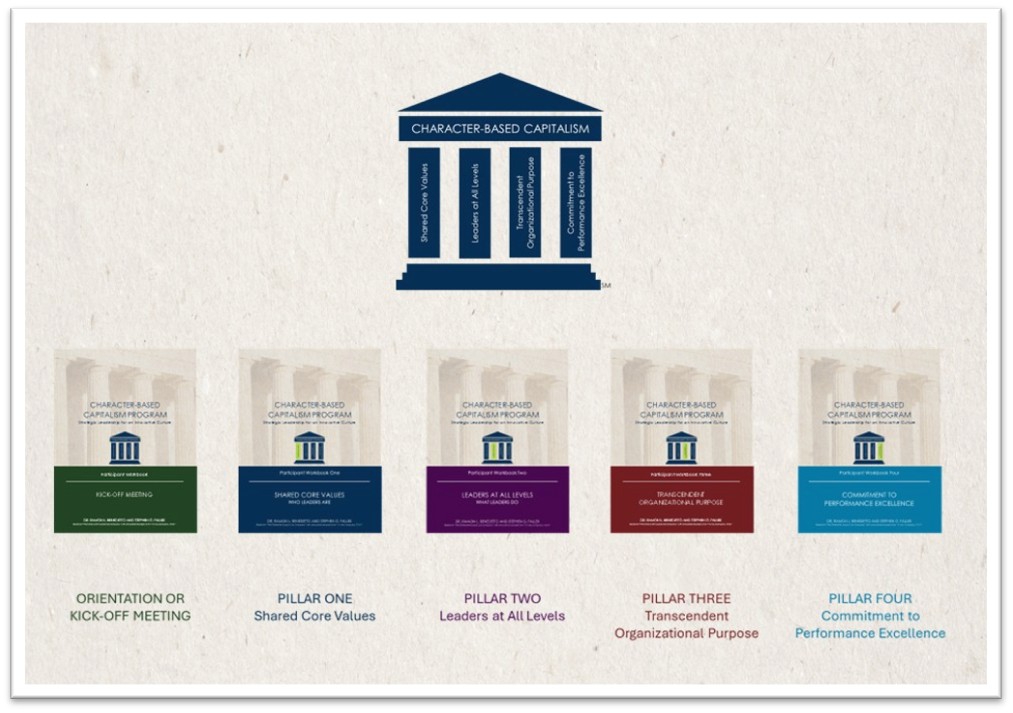
The Design Framework page briefly describes the Four Pillars Framework that underpins the core learning behind GuideStar’s Character-based Capitalism Programs that guide, strengthen, and reinforce the company’s Organizational Leadership System.
All aspects of the Character-based Capitalism learning materials have been carefully curated through extensive research and development over the past 20 years.
This section outlines the program content, which involves both synchronous and asynchronous learning:
· Synchronous learning occurs when leaders at the same level within an organization engage in discussions and sharing their knowledge and perspectives by executing asynchronous assignments within their workbooks.
· Asynchronous learning occurs when participants engage with materials only accessible via the unique online learning platform to which they gain access after course registration. The very first step with each Pillar is downloading the associated workbook, which outlines the journey participants will follow to master content for that Pillar. Participants access videos, interactive assignments, and worksheets as they navigate the process.
All Character-based Capitalism programs follow a consistent structure because all programs employ the Four Pillars Framework in how learning materials are aligned, arrayed, and facilitated.
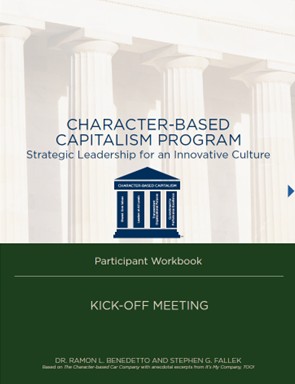
Orientation / Kickoff
(for Individual Coaching or Organizational Development Programs)
Performance Excellence
(Innovation, Journey to Performance Excellence)
Assessments
(Personality Profile, Emotional Intelligence, Leadership)
Change Vision
Pillar One: Shared Core Values
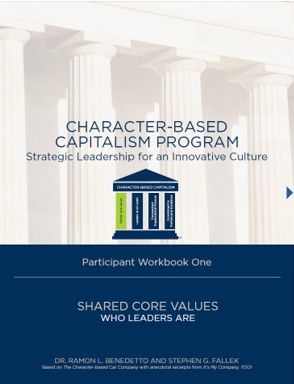
Alignment on Shared Core Values
(Development of Shared Core Values)
Building the Character-based Culture
(Hiring for Character, Recognizing and Rewarding for Character, Artifacts of Organizational Culture)
Pillar Two: Leaders at All Levels
What Makes a Leader
(Management vs. Leadership, Levels of Leadership, Servant Leadership)
Competences of a Leader
(Character, Emotional Intelligence, Business Knowledge, Critical Thinking)
Pillar Three: Transcendent Organizational Purpose
Alignment on Purpose
(Development of Vision, Mission, Goal)
Line-of-Sight
Pillar Four: Commitment to Performance Excellence
Leadership Attributes
(Transformational Leadership, Emotionally Intelligent Leadership, Servant Leadership)
Knowledge Attributes
(Transparency, Collaboration)
Execution Attributes
(Teamwork, Mindfulness)